
2023
Jo, Andrew; Deniz, Sercan; Xu, Jian; Duvoisin, Robert M.; DeVries, Steven H.; Zhu, Yongling
A sign-inverted receptive field of inhibitory interneurons provides a pathway for ON-OFF interactions in the retina Journal Article
In: Nat Commun, vol. 14, no. 1, 2023, ISSN: 2041-1723.
@article{Jo2023,
title = {A sign-inverted receptive field of inhibitory interneurons provides a pathway for ON-OFF interactions in the retina},
author = {Andrew Jo and Sercan Deniz and Jian Xu and Robert M. Duvoisin and Steven H. DeVries and Yongling Zhu},
doi = {10.1038/s41467-023-41638-3},
issn = {2041-1723},
year = {2023},
date = {2023-12-00},
journal = {Nat Commun},
volume = {14},
number = {1},
publisher = {Springer Science and Business Media LLC},
abstract = {Abstract A fundamental organizing plan of the retina is that visual information is divided into ON and OFF streams that are processed in separate layers. This functional dichotomy originates in the ON and OFF bipolar cells, which then make excitatory glutamatergic synapses onto amacrine and ganglion cells in the inner plexiform layer. We have identified an amacrine cell (AC), the sign-inverting (SI) AC, that challenges this fundamental plan. The glycinergic, ON-stratifying SI-AC has OFF light responses. In opposition to the classical wiring diagrams, it receives inhibitory inputs from glutamatergic ON bipolar cells at mGluR8 synapses, and excitatory inputs from an OFF wide-field AC at electrical synapses. This “inhibitory ON center - excitatory OFF surround” receptive-field of the SI-AC allows it to use monostratified dendrites to conduct crossover inhibition and push-pull activation to enhance light detection by ACs and RGCs in the dark and feature discrimination in the light. },
keywords = {},
pubstate = {published},
tppubtype = {article}
}
Jo, Andrew; Deniz, Sercan; Cherian, Suraj; Xu, Jian; Futagi, Daiki; DeVries, Steven H.; Zhu, Yongling
Modular interneuron circuits control motion sensitivity in the mouse retina Journal Article
In: Nat Commun, vol. 14, no. 1, 2023, ISSN: 2041-1723.
@article{Jo2023b,
title = {Modular interneuron circuits control motion sensitivity in the mouse retina},
author = {Andrew Jo and Sercan Deniz and Suraj Cherian and Jian Xu and Daiki Futagi and Steven H. DeVries and Yongling Zhu},
doi = {10.1038/s41467-023-43382-0},
issn = {2041-1723},
year = {2023},
date = {2023-12-00},
journal = {Nat Commun},
volume = {14},
number = {1},
publisher = {Springer Science and Business Media LLC},
abstract = {Abstract Neural computations arise from highly precise connections between specific types of neurons. Retinal ganglion cells (RGCs) with similar stratification patterns are positioned to receive similar inputs but often display different response properties. In this study, we used intersectional mouse genetics to achieve single-cell type labeling and identified an object motion sensitive (OMS) AC type, COMS-AC(counter-OMS AC). Optogenetic stimulation revealed that COMS-AC makes glycinergic synapses with the OMS-insensitive HD2p-RGC, while chemogenetic inactivation showed that COMS-AC provides inhibitory control to HD2p-RGC during local motion. This local inhibition, combined with the inhibitory drive from TH2-AC during global motion, explains the OMS-insensitive feature of HD2p-RGC. In contrast, COMS-AC fails to make synapses with W3(UHD)-RGC, allowing it to exhibit OMS under the control of VGlut3-AC and TH2-AC. These findings reveal modular interneuron circuits that endow structurally similar RGC types with different responses and present a mechanism for redundancy-reduction in the retina to expand coding capacity. },
keywords = {},
pubstate = {published},
tppubtype = {article}
}
Grabner, C. P.; Futagi, D.; Shi, J.; Bindokas, V.; Kitano, K.; Schwartz, E. A.; DeVries, S. H.
Mechanisms of simultaneous linear and nonlinear computations at the mammalian cone photoreceptor synapse Journal Article
In: Nat Commun, vol. 14, no. 1, pp. 3486, 2023, (Nat Commun. 2023 Jun 16;14(1):3486. doi: 10.1038/s41467-023-38943-2.).
@article{RN87,

title = {Mechanisms of simultaneous linear and nonlinear computations at the mammalian cone photoreceptor synapse},

author = {C. P. Grabner and D. Futagi and J. Shi and V. Bindokas and K. Kitano and E. A. Schwartz and S. H. DeVries},

url = {https://www.ncbi.nlm.nih.gov/pubmed/37328451},

doi = {10.1038/s41467-023-38943-2},

year  = {2023},

date = {2023-01-01},

urldate = {2023-01-01},

journal = {Nat Commun},

volume = {14},

number = {1},

pages = {3486},

abstract = {Neurons enhance their computational power by combining linear and nonlinear transformations in extended dendritic trees. Rich, spatially distributed processing is rarely associated with individual synapses, but the cone photoreceptor synapse may be an exception. Graded voltages temporally modulate vesicle fusion at a cone's ~20 ribbon active zones. Transmitter then flows into a common, glia-free volume where bipolar cell dendrites are organized by type in successive tiers. Using super-resolution microscopy and tracking vesicle fusion and postsynaptic responses at the quantal level in the thirteen-lined ground squirrel, Ictidomys tridecemlineatus, we show that certain bipolar cell types respond to individual fusion events in the vesicle stream while other types respond to degrees of locally coincident events, creating a gradient across tiers that are increasingly nonlinear. Nonlinearities emerge from a combination of factors specific to each bipolar cell type including diffusion distance, contact number, receptor affinity, and proximity to glutamate transporters. Complex computations related to feature detection begin within the first visual synapse.},

note = {Nat Commun. 2023 Jun 16;14(1):3486. doi: 10.1038/s41467-023-38943-2.},

keywords = {},

pubstate = {published},

tppubtype = {article}

}
2020
Xu, J.; DeVries, S. H.; Zhu, Y.
Quantification of Adeno-Associated Virus with Safe Nucleic Acid Dyes Journal Article
In: Hum Gene Ther, vol. 31, no. 19-20, pp. 1086-1099, 2020, (Hum Gene Ther. 2020 Oct;31(19-20):1086-1099. doi: 10.1089/hum.2020.063. Epub 2020 Jul 14.).
@article{RN88,

title = {Quantification of Adeno-Associated Virus with Safe Nucleic Acid Dyes},

author = {J. Xu and S. H. DeVries and Y. Zhu},

url = {https://www.ncbi.nlm.nih.gov/pubmed/32368927},

doi = {10.1089/hum.2020.063},

year  = {2020},

date = {2020-01-01},

urldate = {2020-01-01},

journal = {Hum Gene Ther},

volume = {31},

number = {19-20},

pages = {1086-1099},

abstract = {Adeno-associated virus (AAV) is the most commonly used viral vector for both biological and gene therapeutic applications. Although many methods have been developed to measure quantity attributes of AAV, they are often technically challenging and time-consuming. Here, we report a method to titer AAV with GelGreen((R)) dye, a safe green fluorescence nucleic acid dye recently engineered by Biotium company (Fremont, CA). This method, hereinafter referred to as GelGreen method, provides a fast ( approximately 30 min) and reliable strategy for AAV titration. To validate GelGreen method, we measured genome titer of an AAV reference material AAV8RSM and compared our titration results with those determined by Reference Material Working Group (ARMWG). We showed that GelGreen results and capsid enzyme-linked immunosorbent assay results are comparable with each other. We also showed that GelRed((R)) dye, a red fluorescence dye from Biotium, can be used to directly "visualize" AAV genome titer on a conventional gel imager, presenting an especially direct approach to estimate viral quantity. Finally, we showed that GelGreen and GelRed dyes can also be used to quantify self-complementary AAV (scAAV) and crudely purified AAV samples. In summary, we described a technique to titer AAV by using new generation of safe DNA dyes. This technique is simple, safe, reliable, and cost efficient. It has potential to be broadly applied for quantifying and normalizing AAV viral vectors.},

note = {Hum Gene Ther. 2020 Oct;31(19-20):1086-1099. doi: 10.1089/hum.2020.063. Epub 2020 Jul 14.},

keywords = {},

pubstate = {published},

tppubtype = {article}

}
DeVries, Steven H.
Graded Signaling and the Emergence of Multiple Visual Streams in the Outer Retina Book Chapter
In: Fritzsch, B.; Martin, P. R. (Ed.): The Senses: A Comprehensive Reference, vol. 1, pp. 309-319, Elsevier, 2020, ISBN: 9780128054093.
@inbook{RN238,

title = {Graded Signaling and the Emergence of Multiple Visual Streams in the Outer Retina},

author = {Steven H. DeVries},

editor = {B. Fritzsch and P. R. Martin},

doi = {10.1016/b978-0-12-805408-6.00006-3},

isbn = {9780128054093},

year  = {2020},

date = {2020-01-01},

urldate = {2020-01-01},

booktitle = {The Senses: A Comprehensive Reference},

volume = {1},

pages = {309-319},

publisher = {Elsevier},

keywords = {},

pubstate = {published},

tppubtype = {inbook}

}
2018
Jo, A.; Xu, J.; Deniz, S.; Cherian, S.; DeVries, S. H.; Zhu, Y.
Intersectional Strategies for Targeting Amacrine and Ganglion Cell Types in the Mouse Retina Journal Article
In: Front Neural Circuits, vol. 12, pp. 66, 2018, (Front Neural Circuits. 2018 Aug 22;12:66. doi: 10.3389/fncir.2018.00066. eCollection 2018.).
@article{RN89,

title = {Intersectional Strategies for Targeting Amacrine and Ganglion Cell Types in the Mouse Retina},

author = {A. Jo and J. Xu and S. Deniz and S. Cherian and S. H. DeVries and Y. Zhu},

url = {https://www.ncbi.nlm.nih.gov/pubmed/30186122},

doi = {10.3389/fncir.2018.00066},

year  = {2018},

date = {2018-01-01},

urldate = {2018-01-01},

journal = {Front Neural Circuits},

volume = {12},

pages = {66},

abstract = {The mammalian retina harbors over 100 different cell types. To understand how retinal circuits work, it is essential to systematically access each type. A widely used approach for achieving targeted transgene expression exploits promoter-driven Cre lines. However, Cre expression in a given transgenic line in the retina and elsewhere in the brain is rarely confined to a single cell type, contributing ambiguity to the interpretation of results from broadly applied manipulations. To obtain unambiguous information about retinal processing, it is desirable to have strategies for further restricting transgene expression to a few or even to a single cell type. We employed an intersectional strategy based on a Cre/Flp double recombinase system to target amacrine and ganglion cell types in the inner retina. We analyzed expression patterns in seven Flp drivers and then created combinational mouse lines by selective cross breeding with Cre drivers. Breeding with Flp drivers can routinely remove labeling from more than 90% of the cells in Cre drivers, leading to only a handful cell types, typically 2-3, remaining in the intersection. Cre/Flp combinatorial mouse lines enabled us to identify and anatomically characterize retinal cell types with greater ease and demonstrated the feasibility of intersectional strategies in retinal research. In addition to the retina, we examined Flp expression in the lateral geniculate nucleus and superior colliculus. Our results establish a foundation for future application of intersectional strategies in the retina and retino-recipient regions.},

note = {Front Neural Circuits. 2018 Aug 22;12:66. doi: 10.3389/fncir.2018.00066. eCollection 2018.},

keywords = {},

pubstate = {published},

tppubtype = {article}

}
2016
Grabner, C. P.; Ratliff, C. P.; Light, A. C.; DeVries, S. H.
Mechanism of High-Frequency Signaling at a Depressing Ribbon Synapse Journal Article
In: Neuron, vol. 91, no. 1, pp. 133-45, 2016, (Neuron. 2016 Jul 6;91(1):133-45. doi: 10.1016/j.neuron.2016.05.019. Epub 2016 Jun 9.).
@article{RN31,

title = {Mechanism of High-Frequency Signaling at a Depressing Ribbon Synapse},

author = {C. P. Grabner and C. P. Ratliff and A. C. Light and S. H. DeVries},

url = {https://www.ncbi.nlm.nih.gov/pubmed/27292536},

doi = {10.1016/j.neuron.2016.05.019},

year  = {2016},

date = {2016-01-01},

urldate = {2016-01-01},

journal = {Neuron},

volume = {91},

number = {1},

pages = {133-45},

abstract = {Ribbon synapses mediate continuous release in neurons that have graded voltage responses. While mammalian retinas can signal visual flicker at 80-100 Hz, the time constant, tau, for the refilling of a depleted vesicle release pool at cone photoreceptor ribbons is 0.7-1.1 s. Due to this prolonged depression, the mechanism for encoding high temporal frequencies is unclear. To determine the mechanism of high-frequency signaling, we focused on an "Off" cone bipolar cell type in the ground squirrel, the cb2, whose transient postsynaptic responses recovered following presynaptic depletion with a tau of approximately 0.1 s, or 7- to 10-fold faster than the tau for presynaptic pool refilling. The difference in recovery time course is caused by AMPA receptor saturation, where partial refilling of the presynaptic pool is sufficient for a full postsynaptic response. By limiting the dynamic range of the synapse, receptor saturation counteracts ribbon depression to produce rapid recovery and facilitate high-frequency signaling.},

note = {Neuron. 2016 Jul 6;91(1):133-45. doi: 10.1016/j.neuron.2016.05.019. Epub 2016 Jun 9.},

keywords = {},

pubstate = {published},

tppubtype = {article}

}
2015
Jacoby, J.; Zhu, Y.; DeVries, S. H.; Schwartz, G. W.
An Amacrine Cell Circuit for Signaling Steady Illumination in the Retina Journal Article
In: Cell Rep, vol. 13, no. 12, pp. 2663-70, 2015, (Cell Rep. 2015 Dec 29;13(12):2663-70. doi: 10.1016/j.celrep.2015.11.062. Epub 2015 Dec 17.).
@article{RN91,

title = {An Amacrine Cell Circuit for Signaling Steady Illumination in the Retina},

author = {J. Jacoby and Y. Zhu and S. H. DeVries and G. W. Schwartz},

url = {https://www.ncbi.nlm.nih.gov/pubmed/26711334},

doi = {10.1016/j.celrep.2015.11.062},

year  = {2015},

date = {2015-01-01},

urldate = {2015-01-01},

journal = {Cell Rep},

volume = {13},

number = {12},

pages = {2663-70},

abstract = {Decades of research have focused on the circuit connectivity between retinal neurons, but only a handful of amacrine cells have been described functionally and placed in the context of a specific retinal circuit. Here, we identify a circuit where inhibition from a specific amacrine cell plays a vital role in shaping the feature selectivity of a postsynaptic ganglion cell. We record from transgenically labeled CRH-1 amacrine cells and identify a postsynaptic target for CRH-1 amacrine cell inhibition in an atypical retinal ganglion cell (RGC) in mouse retina, the Suppressed-by-Contrast (SbC) RGC. Unlike other RGC types, SbC RGCs spike tonically in steady illumination and are suppressed by both increases and decreases in illumination. Inhibition from GABAergic CRH-1 amacrine cells shapes this unique contrast response profile to positive contrast. We show the existence and impact of this circuit, with both paired recordings and cell-type-specific ablation.},

note = {Cell Rep. 2015 Dec 29;13(12):2663-70. doi: 10.1016/j.celrep.2015.11.062. Epub 2015 Dec 17.},

keywords = {},

pubstate = {published},

tppubtype = {article}

}
2014
Zhu, Y.; Xu, J.; Hauswirth, W. W.; DeVries, S. H.
Genetically targeted binary labeling of retinal neurons Journal Article
In: J Neurosci, vol. 34, no. 23, pp. 7845-61, 2014, (J Neurosci. 2014 Jun 4;34(23):7845-61. doi: 10.1523/JNEUROSCI.2960-13.2014.).
@article{RN92,

title = {Genetically targeted binary labeling of retinal neurons},

author = {Y. Zhu and J. Xu and W. W. Hauswirth and S. H. DeVries},

url = {https://www.ncbi.nlm.nih.gov/pubmed/24899708},

doi = {10.1523/JNEUROSCI.2960-13.2014},

year  = {2014},

date = {2014-01-01},

urldate = {2014-01-01},

journal = {J Neurosci},

volume = {34},

number = {23},

pages = {7845-61},

abstract = {A major stumbling block to understanding neural circuits is the extreme anatomical and functional diversity of interneurons. Subsets of interneurons can be targeted for manipulation using Cre mouse lines, but Cre expression is rarely confined to a single interneuron type. It is essential to have a strategy that further restricts labeling in Cre driver lines. We now describe an approach that combines Cre driver mice, recombinant adeno-associated virus, and rabies virus to produce sparse but binary labeling of select interneurons–frequently only a single cell in a large region. We used this approach to characterize the retinal amacrine and ganglion cell types in five GABAergic Cre mouse (Mus musculus) lines, and identified two new amacrine cell types: an asymmetric medium-field type and a wide-field type. We also labeled several wide-field amacrine cell types that have been previously identified based on morphology but whose connectivity and function had not been systematically studied due to lack of genetic markers. All Cre-expressing amacrine cells labeled with an antibody to GABA. Cre-expressing RGCs lacked GABA labeling and included classically defined as well as recently identified types. In addition to the retina, our technique leads to sparse labeling of neurons in the cortex, lateral geniculate nucleus, and superior colliculus, and can be used to express optogenetic tools such as channelrhodopsin and protein sensors such as GCaMP. The Cre drivers identified in this study provide genetic access to otherwise hard to access cell types for systematic analysis including anatomical characterization, physiological recording, optogenetic and/or chemical manipulation, and circuit mapping.},

note = {J Neurosci. 2014 Jun 4;34(23):7845-61. doi: 10.1523/JNEUROSCI.2960-13.2014.},

keywords = {},

pubstate = {published},

tppubtype = {article}

}
Lindstrom, S. H.; Ryan, D. G.; Shi, J.; DeVries, S. H.
Kainate receptor subunit diversity underlying response diversity in retinal off bipolar cells Journal Article
In: J Physiol, vol. 592, no. 7, pp. 1457-77, 2014, (J Physiol. 2014 Apr 1;592(7):1457-77. doi: 10.1113/jphysiol.2013.265033. Epub 2014 Jan 6.).
@article{RN93,

title = {Kainate receptor subunit diversity underlying response diversity in retinal off bipolar cells},

author = {S. H. Lindstrom and D. G. Ryan and J. Shi and S. H. DeVries},

url = {https://www.ncbi.nlm.nih.gov/pubmed/24396054},

doi = {10.1113/jphysiol.2013.265033},

year  = {2014},

date = {2014-01-01},

urldate = {2014-01-01},

journal = {J Physiol},

volume = {592},

number = {7},

pages = {1457-77},

abstract = {Postsynaptic kainate receptors mediate excitatory synaptic transmission over a broad range of temporal frequencies. In heterologous systems, the temporal responses of kainate receptors vary when different channel-forming and auxiliary subunits are co-expressed but how this variability relates to the temporal differences at central synapses is incompletely understood. The mammalian cone photoreceptor synapse provides advantages for comparing the different temporal signalling roles of kainate receptors, as cones release glutamate over a range of temporal frequencies, and three functionally distinct Off bipolar cell types receive cone signals at synapses that contain either AMPA or kainate receptors, all with different temporal properties. A disadvantage is that the different receptor subunits are not identified. We used in situ hybridization, immunocytochemistry, and pharmacology to identify the kainate receptor and auxiliary subunits in ground squirrel (Ictidomys tridecimlineatus) cb1a/b, cb2, and cb3a/b Off bipolar cell types. As expected, the types showed distinct subunit expression patterns. Kainate receptors mediated approximately 80% of the synaptic response in cb3a/b cells and were heteromers of GluK1 and GluK5. Cb3a/b cells contained message for GluK1 and GluK5, and also GluK3 and the auxiliary subunit Neto1. The synaptic responses in cb1a/b cells were mediated by GluK1-containing kainate receptors that behaved differently from the receptors expressed by cb3a/b cells. AMPA receptors mediated the entire synaptic response in cb2 cells and the remaining synaptic response in cb3a/b cells. We conclude that GluK1 is the predominant kainate receptor subunit in cb1 and cb3 Off bipolar cells. Different temporal response properties may result from selective association with GluK3, GluK5, or Neto1.},

note = {J Physiol. 2014 Apr 1;592(7):1457-77. doi: 10.1113/jphysiol.2013.265033. Epub 2014 Jan 6.},

keywords = {},

pubstate = {published},

tppubtype = {article}

}
2012
Sher, A.; DeVries, S. H.
A non-canonical pathway for mammalian blue-green color vision Journal Article
In: Nat Neurosci, vol. 15, no. 7, pp. 952-3, 2012, (Nat Neurosci. 2012 May 27;15(7):952-3. doi: 10.1038/nn.3127.).
@article{RN95,

title = {A non-canonical pathway for mammalian blue-green color vision},

author = {A. Sher and S. H. DeVries},

url = {https://www.ncbi.nlm.nih.gov/pubmed/22634728},

doi = {10.1038/nn.3127},

year  = {2012},

date = {2012-01-01},

urldate = {2012-01-01},

journal = {Nat Neurosci},

volume = {15},

number = {7},

pages = {952-3},

abstract = {The dynamic range of visual coding is extended by having separate ganglion cell types that respond to light increments and decrements. Although the primordial color vision system in mammals contains a well-characterized ganglion cell that responds to blue light increments (a blue On center cell), less is known about ganglion cells that respond to blue light decrements (blue Off center cells). We identified a regular mosaic of blue Off center ganglion cells in the ground squirrel. Contrary to the standard scheme, blue Off responses came from a blue On bipolar and inverting amacrine cell.},

note = {Nat Neurosci. 2012 May 27;15(7):952-3. doi: 10.1038/nn.3127.},

keywords = {},

pubstate = {published},

tppubtype = {article}

}
Saszik, S.; DeVries, S. H.
A mammalian retinal bipolar cell uses both graded changes in membrane voltage and all-or-nothing Na+ spikes to encode light Journal Article
In: J Neurosci, vol. 32, no. 1, pp. 297-307, 2012, (J Neurosci. 2012 Jan 4;32(1):297-307. doi: 10.1523/JNEUROSCI.2739-08.2012.).
@article{RN96,

title = {A mammalian retinal bipolar cell uses both graded changes in membrane voltage and all-or-nothing Na+ spikes to encode light},

author = {S. Saszik and S. H. DeVries},

url = {https://www.ncbi.nlm.nih.gov/pubmed/22219291},

doi = {10.1523/JNEUROSCI.2739-08.2012},

year  = {2012},

date = {2012-01-01},

urldate = {2012-01-01},

journal = {J Neurosci},

volume = {32},

number = {1},

pages = {297-307},

abstract = {Barlow (1953) studied summation in ganglion cell receptive fields and observed a fine discrimination of spatial information from which he inferred that retinal interneurons use analog signals to process images. Subsequent intracellular recordings confirmed that the interneurons of the outer retina, including photoreceptors, horizontal cells, and bipolar cells, respond to light with slow, graded changes in membrane potential. Analog processing may enable interneurons to discriminate fine gradations in light intensity and spatiotemporal pattern, but at the expense of the speed, temporal precision, and threshold discrimination that are characteristic of all-or-nothing Na(+) spikes. We show that one type of mammalian On bipolar cell, the ground squirrel cb5b, has a large tetrodotoxin (TTX)-sensitive Na(+) current. When recorded from in the perforated patch configuration, cb5b cells can signal the onset of a light step with 1-3 all-or-nothing action potentials that attain a peak amplitude of -10 to -20 mV (peak width at half-height equals 2-3 ms). When exposed to a continuous, temporally fluctuating stimulus, cb5b cells generate both graded and spiking responses. Cb5b cells spike with millisecond precision, selecting for stimulus sequences in which transitions to light are preceded by a period of darkness. The axon terminals of cb5b bipolar cells costratify with the dendrites of amacrine and ganglion cells that encode light onset with a short latency burst of spikes. The results support the idea that a spiking On bipolar cell is part of a dedicated retinal pathway for rapidly and reliably signaling dark to light transitions.},

note = {J Neurosci. 2012 Jan 4;32(1):297-307. doi: 10.1523/JNEUROSCI.2739-08.2012.},

keywords = {},

pubstate = {published},

tppubtype = {article}

}
Light, A. C.; Zhu, Y.; Shi, J.; Saszik, S.; Lindstrom, S.; Davidson, L.; Li, X.; Chiodo, V. A.; Hauswirth, W. W.; Li, W.; DeVries, S. H.
Organizational motifs for ground squirrel cone bipolar cells Journal Article
In: J Comp Neurol, vol. 520, no. 13, pp. 2864-87, 2012, (J Comp Neurol. 2012 Sep 1;520(13):2864-87. doi: 10.1002/cne.23068.).
@article{RN25,

title = {Organizational motifs for ground squirrel cone bipolar cells},

author = {A. C. Light and Y. Zhu and J. Shi and S. Saszik and S. Lindstrom and L. Davidson and X. Li and V. A. Chiodo and W. W. Hauswirth and W. Li and S. H. DeVries},

url = {http://www.ncbi.nlm.nih.gov/pubmed/22778006},

doi = {10.1002/cne.23068},

year  = {2012},

date = {2012-01-01},

urldate = {2012-01-01},

journal = {J Comp Neurol},

volume = {520},

number = {13},

pages = {2864-87},

abstract = {In daylight vision, parallel processing starts at the cone synapse. Cone signals flow to On and Off bipolar cells, which are further divided into types according to morphology, immunocytochemistry, and function. The axons of the bipolar cell types stratify at different levels in the inner plexiform layer (IPL) and can interact with costratifying amacrine and ganglion cells. These interactions endow the ganglion cell types with unique functional properties. The wiring that underlies the interactions among bipolar, amacrine, and ganglion cells is poorly understood. It may be easier to elucidate this wiring if organizational rules can be established. We identify 13 types of cone bipolar cells in the ground squirrel, 11 of which contact contiguous cones, with the possible exception of short-wavelength-sensitive cones. Cells were identified by antibody labeling, tracer filling, and Golgi-like filling following transduction with an adeno-associated virus encoding for green fluorescent protein. The 11 bipolar cell types displayed two organizational patterns. In the first pattern, eight to 10 of the 11 types came in pairs with partially overlapping axonal stratification. Pairs shared morphological, immunocytochemical, and functional properties. The existence of similar pairs is a new motif that might have implications for how signals first diverge from a cone to bipolar cells and then reconverge onto a costratifying ganglion cell. The second pattern is a mirror symmetric organization about the middle of the IPL involving at least seven bipolar cell types. This anatomical symmetry may be associated with a functional symmetry in On and Off ganglion cell responses.},

note = {J Comp Neurol. 2012 Sep 1;520(13):2864-87. doi: 10.1002/cne.23068.},

keywords = {},

pubstate = {published},

tppubtype = {article}

}
2011
Szmajda, B. A.; DeVries, S. H.
Glutamate spillover between mammalian cone photoreceptors Journal Article
In: J Neurosci, vol. 31, no. 38, pp. 13431-41, 2011, (J Neurosci. 2011 Sep 21;31(38):13431-41. doi: 10.1523/JNEUROSCI.2105-11.2011.).
@article{RN97,

title = {Glutamate spillover between mammalian cone photoreceptors},

author = {B. A. Szmajda and S. H. DeVries},

url = {https://www.ncbi.nlm.nih.gov/pubmed/21940436},

doi = {10.1523/JNEUROSCI.2105-11.2011},

year  = {2011},

date = {2011-01-01},

urldate = {2011-01-01},

journal = {J Neurosci},

volume = {31},

number = {38},

pages = {13431-41},

abstract = {Cone photoreceptors transmit signals at high temporal frequencies and mediate fine spatial vision. High-frequency transmission requires a high rate of glutamate release, which could promote spillover to neighboring cells, whereas spatial vision requires that cones within a tightly packed array signal light to postsynaptic bipolar cells with minimal crosstalk. Glutamate spread from the cone terminal is thought to be limited by presynaptic transporters and nearby glial processes. In addition, there is no ultrastructural evidence for chemical synapses between mammalian cones, although such synapses have been described in lower vertebrate retinas. We tested for cone-cone glutamate diffusion by recording from adjacent cone pairs in the ground squirrel retina, and instead found that the glutamate released by one cone during electrical stimulation activates glutamate transporter Cl(-) conductances on neighboring cones. Unlike in other systems, where crosstalk is diminished by increasing the temperature and by moving to a more intact preparation, glutamate spread persisted at physiological temperatures (37 degrees C) and in retinal flat mounts. The glutamate-gated anion conductance in cones has a reversal potential of approximately -30 mV compared with a cone resting potential of approximately -50 mV; thus, crosstalk should have a depolarizing effect on the cone network. Cone-cone glutamate spread is regulated by the physiological stimulus, light, and under physiological conditions can produce a response of approximately 2 mV, equivalent to 13-20% of a cone's light response. We conclude that in the absence of discrete chemical synapses, glutamate flows between cones during a light response and may mediate a spatially distributed positive feedback.},

note = {J Neurosci. 2011 Sep 21;31(38):13431-41. doi: 10.1523/JNEUROSCI.2105-11.2011.},

keywords = {},

pubstate = {published},

tppubtype = {article}

}
2010
Li, W.; Chen, S.; DeVries, S. H.
A fast rod photoreceptor signaling pathway in the mammalian retina Journal Article
In: Nat Neurosci, vol. 13, no. 4, pp. 414-6, 2010, (Nat Neurosci. 2010 Apr;13(4):414-6. doi: 10.1038/nn.2507. Epub 2010 Feb 28.).
@article{RN98,

title = {A fast rod photoreceptor signaling pathway in the mammalian retina},

author = {W. Li and S. Chen and S. H. DeVries},

url = {https://www.ncbi.nlm.nih.gov/pubmed/20190742},

doi = {10.1038/nn.2507},

year  = {2010},

date = {2010-01-01},

urldate = {2010-01-01},

journal = {Nat Neurosci},

volume = {13},

number = {4},

pages = {414-6},

abstract = {Rod photoreceptors were recently shown to contact 'Off' cone bipolar cells, providing an alternative pathway for rod signal flow in the mammalian retina. By recording from pairs of rods and Off cone bipolar cells in the ground squirrel (Spermophilus tridecemlineatus), we measured the synaptic responses of mammalian rods unfiltered by the slow kinetics of the rod bipolar cell response. We show that vesicle fusion and turnover in mammalian rods is fast, and that this new pathway can mediate rapid signaling.},

note = {Nat Neurosci. 2010 Apr;13(4):414-6. doi: 10.1038/nn.2507. Epub 2010 Feb 28.},

keywords = {},

pubstate = {published},

tppubtype = {article}

}
2006
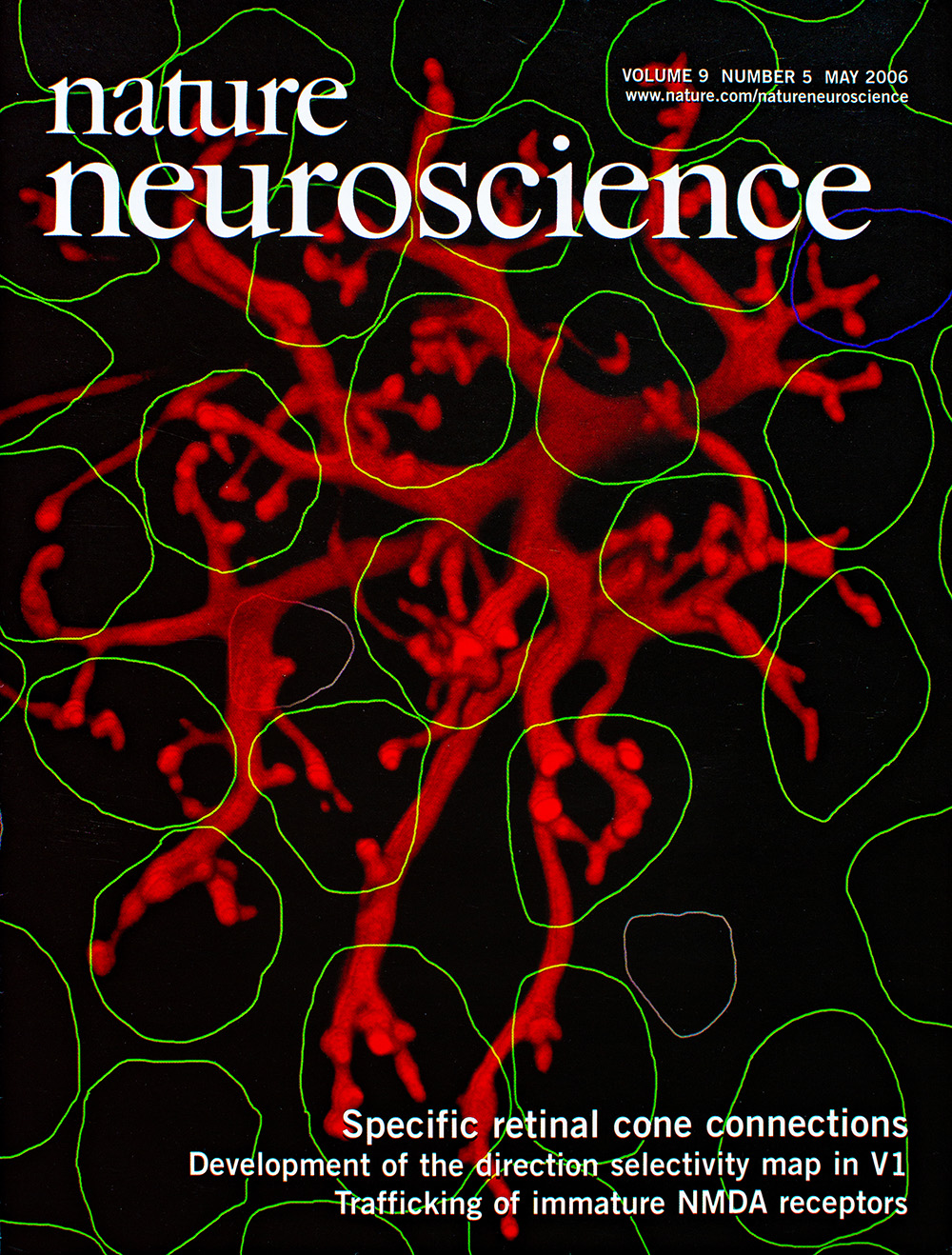
Li, W.; DeVries, S. H.
Bipolar cell pathways for color and luminance vision in a dichromatic mammalian retina Journal Article
In: Nat Neurosci, vol. 9, no. 5, pp. 669-75, 2006, (Nat Neurosci. 2006 May;9(5):669-75. doi: 10.1038/nn1686. Epub 2006 Apr 16.).
@article{RN100,

title = {Bipolar cell pathways for color and luminance vision in a dichromatic mammalian retina},

author = {W. Li and S. H. DeVries},

url = {https://www.ncbi.nlm.nih.gov/pubmed/16617341},

doi = {10.1038/nn1686},

year  = {2006},

date = {2006-01-01},

urldate = {2006-01-01},

journal = {Nat Neurosci},

volume = {9},

number = {5},

pages = {669-75},

abstract = {The mammalian retina is fundamentally dichromatic, with trichromacy only recently emerging in some primates. In dichromats, an array of short wavelength-sensitive (S, blue) and middle wavelength-sensitive (M, green) cones is sampled by approximately ten bipolar cell types, and the sampling pattern determines how retinal ganglion cells and ultimately higher visual centers encode color and luminance. By recording from cone-bipolar cell pairs in the retina of the ground squirrel, we show that the bipolar cell types sample cone signals in three ways: one type receives input exclusively from S-cones, two types receive mixed S/M-cone input and the remaining types receive an almost pure M-cone signal. Bipolar cells that carry S- or M-cone signals can have a role in color discrimination and may contact color-opponent ganglion cells. Bipolar cells that sum signals from S- and M-cones may signal to ganglion cells that encode luminance.},

note = {Nat Neurosci. 2006 May;9(5):669-75. doi: 10.1038/nn1686. Epub 2006 Apr 16.},

keywords = {},

pubstate = {published},

tppubtype = {article}

}
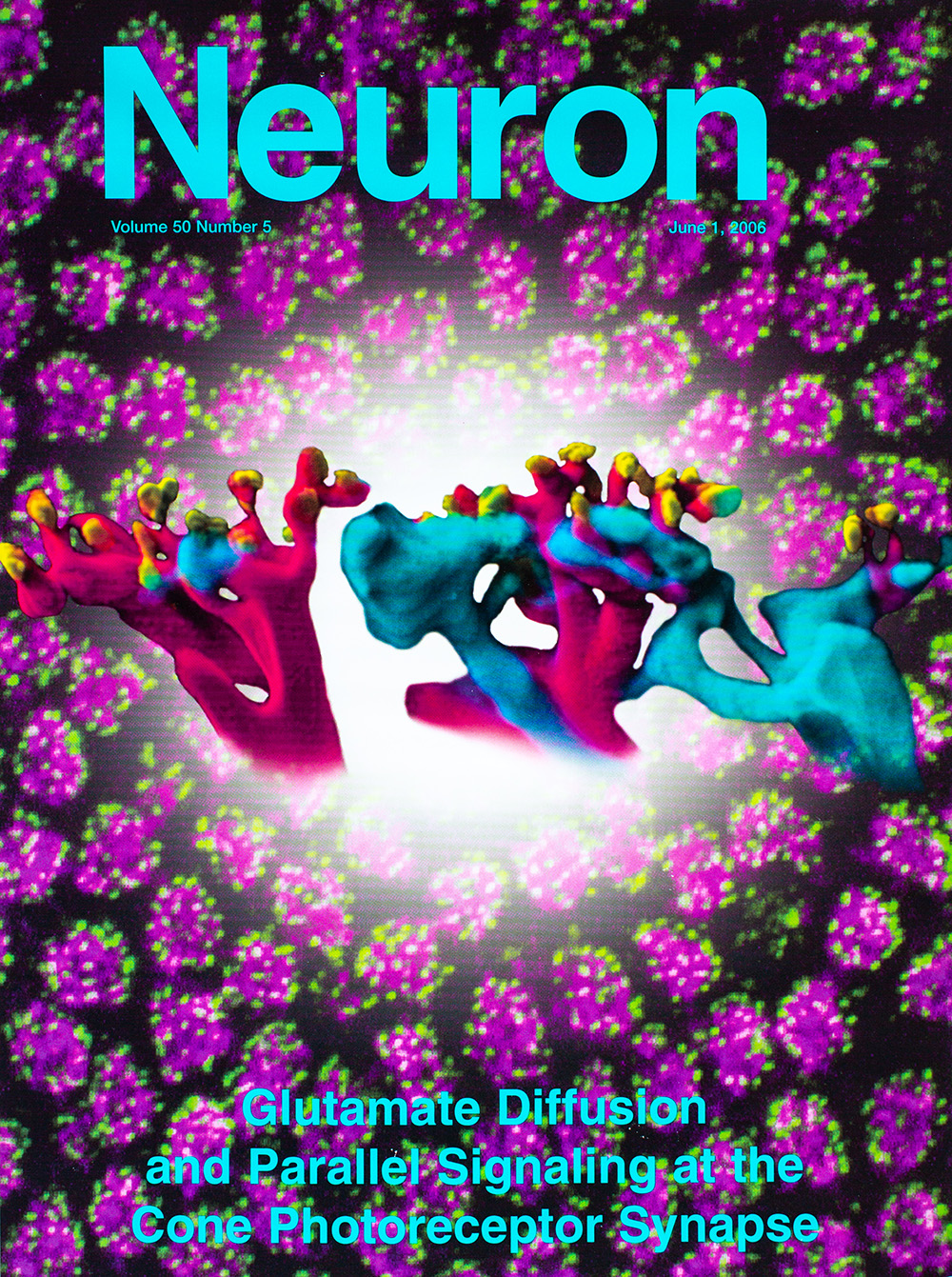
DeVries, S. H.; Li, W.; Saszik, S.
Parallel processing in two transmitter microenvironments at the cone photoreceptor synapse Journal Article
In: Neuron, vol. 50, no. 5, pp. 735-48, 2006, (Neuron. 2006 Jun 1;50(5):735-48. doi: 10.1016/j.neuron.2006.04.034.).
@article{RN99,

title = {Parallel processing in two transmitter microenvironments at the cone photoreceptor synapse},

author = {S. H. DeVries and W. Li and S. Saszik},

url = {https://www.ncbi.nlm.nih.gov/pubmed/16731512},

doi = {10.1016/j.neuron.2006.04.034},

year  = {2006},

date = {2006-01-01},

urldate = {2006-01-01},

journal = {Neuron},

volume = {50},

number = {5},

pages = {735-48},

abstract = {A cone photoreceptor releases glutamate at ribbons located atop narrow membrane invaginations that empty onto a terminal base. The unique shape of the cone terminal suggests that there are two transmitter microenvironments: within invaginations, where concentrations are high and exposures are brief; and at the base, where concentrations are low and exposure is smoothed by diffusion. Using multicell voltage-clamp recording, we show that different subtypes of Off bipolar cells sample transmitter in two microenvironments. The dendrites of an AMPA receptor-containing cell insert into invaginations and sense rapid fluctuations in glutamate concentration that can lead to transient responses. The dendrites of kainate receptor-containing cells make basal contacts and respond to a smoothed flow of glutamate that produces sustained responses. Signaling at the cone to Off bipolar cell synapse illustrates how transmitter spillover and synapse architecture can combine to produce distinct signals in postsynaptic neurons.},

note = {Neuron. 2006 Jun 1;50(5):735-48. doi: 10.1016/j.neuron.2006.04.034.},

keywords = {},

pubstate = {published},

tppubtype = {article}

}
2004
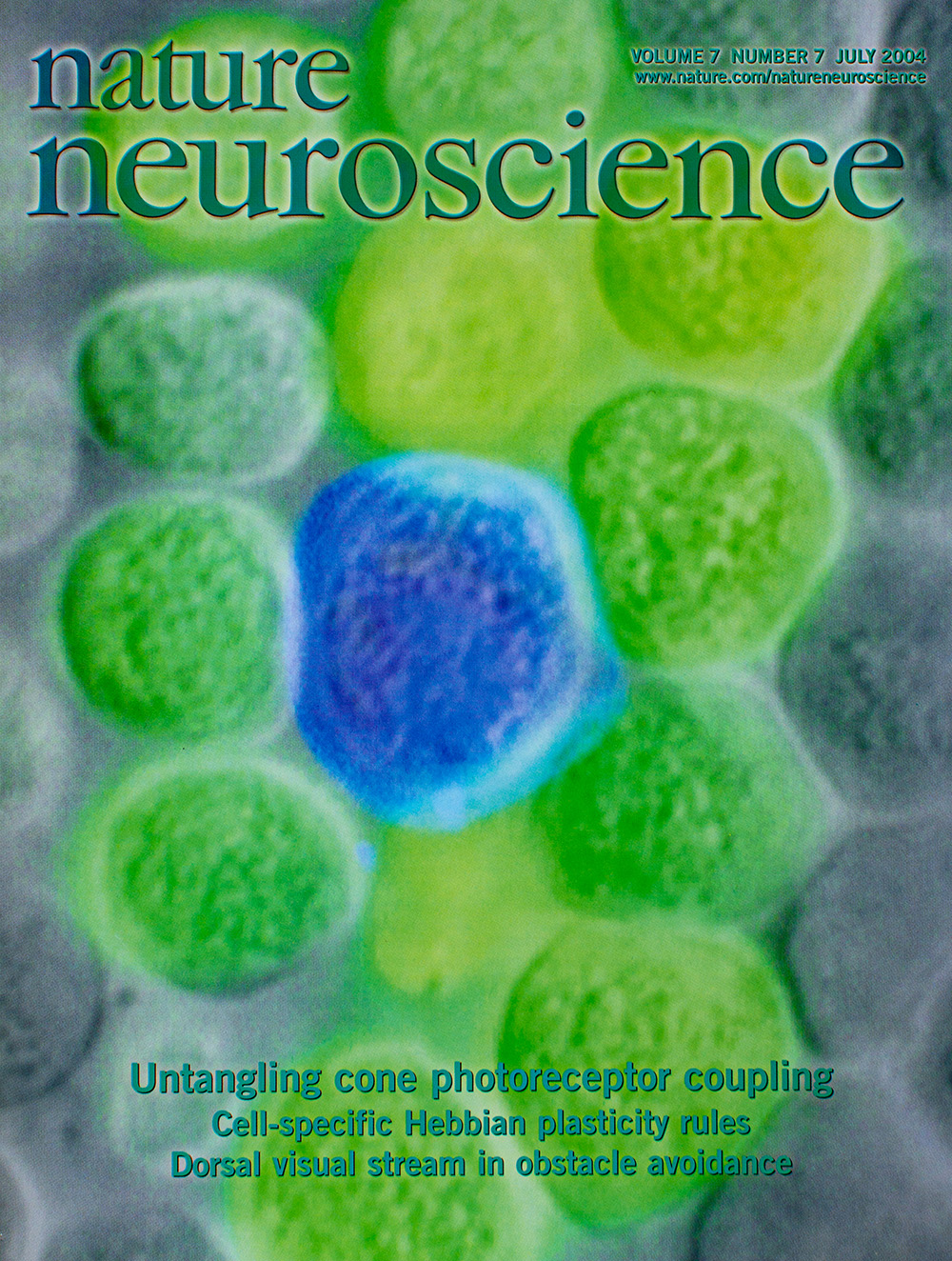
Li, W.; DeVries, S. H.
Separate blue and green cone networks in the mammalian retina Journal Article
In: Nat Neurosci, vol. 7, no. 7, pp. 751-6, 2004, (Nat Neurosci. 2004 Jul;7(7):751-6. doi: 10.1038/nn1275. Epub 2004 Jun 20.).
@article{RN101,

title = {Separate blue and green cone networks in the mammalian retina},

author = {W. Li and S. H. DeVries},

url = {https://www.ncbi.nlm.nih.gov/pubmed/15208635},

doi = {10.1038/nn1275},

year  = {2004},

date = {2004-01-01},

urldate = {2004-01-01},

journal = {Nat Neurosci},

volume = {7},

number = {7},

pages = {751-6},

abstract = {The distinct absorbance spectra of the cone photopigments form the basis of color vision, but ultrastructural and physiological evidence shows that mammalian cones are electrically coupled. Coupling between cones of the same spectral type should average voltage noise in adjacent photoreceptors and improve the ability to resolve low-contrast spatial patterns. However, indiscriminate coupling between spectral types could compromise color vision by smearing chromatic information across channels. Here we show, by measuring the junctional conductance between green-green and blue-green cone pairs in slices from the dichromatic ground-squirrel retina, that green-green cone pairs are routinely coupled with an average conductance of 220 pS, whereas coupling is undetectable in blue-green cone pairs. Together with a lack of tracer coupling and the selective localization of connexin proteins, our results show that signals in blue and green cones are processed separately in the photoreceptor layer.},

note = {Nat Neurosci. 2004 Jul;7(7):751-6. doi: 10.1038/nn1275. Epub 2004 Jun 20.},

keywords = {},

pubstate = {published},

tppubtype = {article}

}
2002
DeVries, S. H.; Qi, X.; Smith, R.; Makous, W.; Sterling, P.
Electrical coupling between mammalian cones Journal Article
In: Curr Biol, vol. 12, no. 22, pp. 1900-7, 2002, (Curr Biol. 2002 Nov 19;12(22):1900-7. doi: 10.1016/s0960-9822(02)01261-7.).
@article{RN102,

title = {Electrical coupling between mammalian cones},

author = {S. H. DeVries and X. Qi and R. Smith and W. Makous and P. Sterling},

url = {https://www.ncbi.nlm.nih.gov/pubmed/12445382},

doi = {10.1016/s0960-9822(02)01261-7},

year  = {2002},

date = {2002-01-01},

urldate = {2002-01-01},

journal = {Curr Biol},

volume = {12},

number = {22},

pages = {1900-7},

abstract = {BACKGROUND: Cone photoreceptors are noisy because of random fluctuations of photon absorption, signaling molecules, and ion channels. However, each cone's noise is independent of the others, whereas their signals are partially shared. Therefore, electrically coupling the synaptic terminals prior to forward transmission and subsequent nonlinear processing can appreciably reduce noise relative to the signal. This signal-processing strategy has been demonstrated in lower vertebrates with rather coarse vision, but its occurrence in mammals with fine acuity has been doubted (even though gap junctions are present) because coupling would blur the neural image. RESULTS: In ground squirrel retina, whose triangular cone lattice resembles the human fovea, paired electrical recordings from adjacent cones demonstrated electrical coupling with an average conductance of approximately 320 pS. Blur caused by this degree of coupling had a space constant of approximately 0.5 cone diameters. Psychophysical measurements employing laser interferometry to bypass the eye's optics suggest that human foveal cones experience a similar degree of neural blur and that it is invariant with light intensity. This neural blur is narrower than the eye's optical blur, and we calculate that it should improve the signal-to-noise ratio at the cone terminal by about 77%. CONCLUSIONS: We conclude that the gap junctions observed between mammalian cones, including those in the human fovea, represent genuine electrical coupling. Because the space constant of the resulting neural blur is less than that of the optical blur, the signal-to-noise ratio can be markedly improved before the nonlinear stages with little compromise to visual acuity.},

note = {Curr Biol. 2002 Nov 19;12(22):1900-7. doi: 10.1016/s0960-9822(02)01261-7.},

keywords = {},

pubstate = {published},

tppubtype = {article}

}
2001
DeVries, S. H.
Exocytosed protons feedback to suppress the Ca2+ current in mammalian cone photoreceptors Journal Article
In: Neuron, vol. 32, no. 6, pp. 1107-17, 2001, (Neuron. 2001 Dec 20;32(6):1107-17. doi: 10.1016/s0896-6273(01)00535-9.).
@article{RN103,

title = {Exocytosed protons feedback to suppress the Ca2+ current in mammalian cone photoreceptors},

author = {S. H. DeVries},

url = {https://www.ncbi.nlm.nih.gov/pubmed/11754841},

doi = {10.1016/s0896-6273(01)00535-9},

year  = {2001},

date = {2001-01-01},

urldate = {2001-01-01},

journal = {Neuron},

volume = {32},

number = {6},

pages = {1107-17},

abstract = {A proton pump acidifies synaptic vesicles and provides the electrochemical gradient for transmitter uptake. Although external protons can modulate membrane voltage- and ligand-gated conductances, the fate of the protons released when vesicles fuse with the plasma membrane is unclear. In the dark, the glutamate-laden vesicles of cone photoreceptors fuse continuously with the plasma membrane. I now show that vesicular protons feed back to block the nearby calcium channels that mediate release. This local proton-mediated feedback is a novel mechanism through which neurons may regulate the release of transmitter.},

note = {Neuron. 2001 Dec 20;32(6):1107-17. doi: 10.1016/s0896-6273(01)00535-9.},

keywords = {},

pubstate = {published},

tppubtype = {article}

}
2000
DeVries, S. H.
Bipolar cells use kainate and AMPA receptors to filter visual information into separate channels Journal Article
In: Neuron, vol. 28, no. 3, pp. 847-56, 2000, (Neuron. 2000 Dec;28(3):847-56. doi: 10.1016/s0896-6273(00)00158-6.).
@article{RN104,

title = {Bipolar cells use kainate and AMPA receptors to filter visual information into separate channels},

author = {S. H. DeVries},

url = {https://www.ncbi.nlm.nih.gov/pubmed/11163271},

doi = {10.1016/s0896-6273(00)00158-6},

year  = {2000},

date = {2000-01-01},

urldate = {2000-01-01},

journal = {Neuron},

volume = {28},

number = {3},

pages = {847-56},

abstract = {Unlike cone photoreceptors, whose light responses have a uniform time course, retinal ganglion cells are tuned to respond to different temporal components in a changing visual scene. The signals in a mammalian cone flow to three to five morphologically distinct "OFF" bipolar cells at a sign-conserving, glutamatergic synapse. By recording simultaneously from pairs of synaptically connected cones and OFF bipolar cells, I now show that each morphological type of OFF bipolar cell receives its signal through a different AMPA or kainate receptor. The characteristic rate at which each receptor recovers from desensitization divides the cone signal into temporal components. Temporal processing begins at the first synapse in the visual system.},

note = {Neuron. 2000 Dec;28(3):847-56. doi: 10.1016/s0896-6273(00)00158-6.},

keywords = {},

pubstate = {published},

tppubtype = {article}

}
1999
DeVries, S. H.; Schwartz, E. A.
Kainate receptors mediate synaptic transmission between cones and 'Off' bipolar cells in a mammalian retina Journal Article
In: Nature, vol. 397, no. 6715, pp. 157-60, 1999, (Nature. 1999 Jan 14;397(6715):157-60. doi: 10.1038/16462.).
@article{RN106,

title = {Kainate receptors mediate synaptic transmission between cones and 'Off' bipolar cells in a mammalian retina},

author = {S. H. DeVries and E. A. Schwartz},

url = {https://www.ncbi.nlm.nih.gov/pubmed/9923677},

doi = {10.1038/16462},

year  = {1999},

date = {1999-01-01},

urldate = {1999-01-01},

journal = {Nature},

volume = {397},

number = {6715},

pages = {157-60},

abstract = {Light produces a graded hyperpolarization in retinal photoreceptors that decreases their release of synaptic neurotransmitter. Cone photoreceptors use glutamate as a neurotransmitter with which to communicate with two types of bipolar cell. Activation of metabotropic glutamate receptors in 'On' bipolar cells initiates a second-messenger cascade that can amplify small synaptic inputs from cones. In contrast, it is not known how the ionotropic glutamate receptors that are activated in 'Off' bipolar cells are optimized for transmitting small, graded signals. Here we show, by recording from a cone and a synaptically connected 'Off' bipolar cell in slices of retina from the ground squirrel, that transmission is mediated by glutamate receptors of the kainate-preferring subtype. In the dark, a cone releases sufficient neurotransmitter to desensitize most postsynaptic kainate receptors. The small postsynaptic current that persists (<5% of maximum) is quickly modulated by changes in presynaptic voltage. Since recovery from desensitization is slow (the decay time constant is roughly 500 milliseconds), little recovery can occur during the brief (roughly 100-millisecond) hyperpolarization that is produced in cones by a flash of light. By limiting the postsynaptic current, receptor desensitization prevents saturation of the 'Off' bipolar cell's voltage response and allows the synapse to operate over the cone's entire physiological voltage range.},

note = {Nature. 1999 Jan 14;397(6715):157-60. doi: 10.1038/16462.},

keywords = {},

pubstate = {published},

tppubtype = {article}

}
DeVries, S. H.
Correlated firing in rabbit retinal ganglion cells Journal Article
In: J Neurophysiol, vol. 81, no. 2, pp. 908-20, 1999, (J Neurophysiol. 1999 Feb;81(2):908-20. doi: 10.1152/jn.1999.81.2.908.).
@article{RN105,

title = {Correlated firing in rabbit retinal ganglion cells},

author = {S. H. DeVries},

url = {https://www.ncbi.nlm.nih.gov/pubmed/10036288},

doi = {10.1152/jn.1999.81.2.908},

year  = {1999},

date = {1999-01-01},

urldate = {1999-01-01},

journal = {J Neurophysiol},

volume = {81},

number = {2},

pages = {908-20},

abstract = {A ganglion cell's receptive field is defined as that region on the retinal surface in which a light stimulus will produce a response. While neighboring ganglion cells may respond to the same stimulus in a region where their receptive fields overlap, it generally has been assumed that each cell makes an independent decision about whether to fire. Recent recordings from cat and salamander retina using multiple electrodes have challenged this view of independent firing by showing that neighboring ganglion cells have an increased tendency to fire together within +/-5 ms. However, there is still uncertainty about which types of ganglion cells fire together, the mechanisms that produce coordinated spikes, and the overall function of coordinated firing. To address these issues, the responses of up to 80 rabbit retinal ganglion cells were recorded simultaneously using a multielectrode array. Of the 11 classes of rabbit ganglion cells previously identified, coordinated firing was observed in five. Plots of the spike train cross-correlation function suggested that coordinated firing occurred through two mechanisms. In the first mechanism, a spike in an interneuron diverged to produce simultaneous spikes in two ganglion cells. This mechanism predominated in four of the five classes including the ON brisk transient cells. In the second mechanism, ganglion cells appeared to activate each other reciprocally. This was the predominant pattern of correlated firing in OFF brisk transient cells. By comparing the receptive field profiles of ON and OFF brisk transient cells, a peripheral extension of the OFF brisk transient cell receptive field was identified that might be produced by lateral spike spread. Thus an individual OFF brisk transient cell can respond both to a light stimulus directed at the center of its receptive field and to stimuli that activate neighboring OFF brisk transient cells through their receptive field centers.},

note = {J Neurophysiol. 1999 Feb;81(2):908-20. doi: 10.1152/jn.1999.81.2.908.},

keywords = {},

pubstate = {published},

tppubtype = {article}

}
1997
Devries, S. H.; Baylor, D. A.
Mosaic arrangement of ganglion cell receptive fields in rabbit retina Journal Article
In: J Neurophysiol, vol. 78, no. 4, pp. 2048-60, 1997, (J Neurophysiol. 1997 Oct;78(4):2048-60. doi: 10.1152/jn.1997.78.4.2048.).
@article{RN107,

title = {Mosaic arrangement of ganglion cell receptive fields in rabbit retina},

author = {S. H. Devries and D. A. Baylor},

url = {https://www.ncbi.nlm.nih.gov/pubmed/9325372},

doi = {10.1152/jn.1997.78.4.2048},

year  = {1997},

date = {1997-01-01},

urldate = {1997-01-01},

journal = {J Neurophysiol},

volume = {78},

number = {4},

pages = {2048-60},

abstract = {The arrangement of ganglion cell receptive fields on the retinal surface should constrain several properties of vision, including spatial resolution. Anatomic and physiological studies on the mammalian retina have shown that the receptive fields of several types of ganglion cells tile the retinal surface, with the degree of receptive field overlap apparently being similar for the different classes. It has been difficult to test the generality of this arrangement, however, because it is hard to sample many receptive fields in the same preparation with conventional single-unit recording. In our experiments, the response properties and receptive fields of up to 80 neighboring ganglion cells in the isolated rabbit retina were characterized simultaneously by recording with a multielectrode array. The cells were divided into 11 classes on the basis of their characteristic light responses and the temporal structures of their impulse trains. The mosaic arrangement of receptive fields for cells of a given class was examined after the spatial profile of each receptive field was fitted with a generalized Gaussian surface. For eight cell classes the mosaic arrangement was similar: the profiles of neighboring cells approached each other at the 1-sigma border. Thus field centers were 2 sigma apart. The layout of fields for the remaining three classes was not well characterized because the fields were poorly fitted by a single Gaussian or because the cells responded selectively to movement. The 2-sigma center-center spacing may be a general principle of functional organization that minimizes spatial aliasing and confers a uniform spatial sensitivity on the ganglion cell population.},

note = {J Neurophysiol. 1997 Oct;78(4):2048-60. doi: 10.1152/jn.1997.78.4.2048.},

keywords = {},

pubstate = {published},

tppubtype = {article}

}
1992
DeVries, S. H.; Schwartz, E. A.
Hemi-gap-junction channels in solitary horizontal cells of the catfish retina Journal Article
In: J Physiol, vol. 445, pp. 201-30, 1992, (J Physiol. 1992 Jan;445:201-30. doi: 10.1113/jphysiol.1992.sp018920.).
@article{RN108,

title = {Hemi-gap-junction channels in solitary horizontal cells of the catfish retina},

author = {S. H. DeVries and E. A. Schwartz},

url = {https://www.ncbi.nlm.nih.gov/pubmed/1380084},

doi = {10.1113/jphysiol.1992.sp018920},

year  = {1992},

date = {1992-01-01},

urldate = {1992-01-01},

journal = {J Physiol},

volume = {445},

pages = {201-30},

abstract = {1. Solitary horizontal cells were isolated from catfish retinas and their membrane current was recorded with a whole-cell voltage clamp. Reducing the extracellular Ca2+ concentration produced a current that could be suppressed by dopamine. This Ca(2+)- and dopamine-sensitive current is hereafter termed I gamma. The voltage dependence, cytoplasmic regulation, and permeability of the I gamma channel suggest that it is half of a gap-junction channel. 2. I gamma was voltage and time dependent. In the steady state, the current-voltage relation displayed outward rectification at voltages more depolarized than 0 mV and a negative resistance region at voltages more hyperpolarized than -15 mV. The reversal potential was 3.3 +/- 1.5 mV when NaCl was the predominant extracellular salt and potassium-D-aspartate was the predominant intracellular salt. 3. The size of I gamma depended on the extracellular Ca2+ concentration. I gamma was maximal at external Ca2+ concentrations below 10 microM, half-maximal at 220 microM-Ca2+, and reduced to less than 4% of its maximum amplitude at external Ca2+ concentrations above 1 mM. Increasing the extracellular Ca2+ concentration reduced the amplitude of I gamma without changing the shape of the current-voltage relation or the kinetics of inactivation. Thus, rectification does not result from a voltage-dependent block by extracellular Ca2+. 4. Patches of cell membrane were voltage clamped in both the cell-attached and excised-patch configurations. In the cell-attached configuration, the addition of dopamine to the solution outside the patch pipette blocked the opening of channels within the membrane patch. Thus, dopamine closes I gamma channels by initiating an intracellular messenger cascade. In the excised-patch configuration, a maximum conductance of 145 pS was measured while Cs+ and tetraethylammonium+ (TEA+) were the only monovalent cations on both sides of the membrane. 5. The ability of dopamine to suppress I gamma was blocked by introducing an inhibitor of the cyclic AMP-dependent protein kinase, PKI5-24, into the cytoplasm. Thus, the action of dopamine is mediated by a pathway that includes the activation of a cyclic AMP-dependent kinase. 6. I gamma was suppressed by nitroprusside, an agent which activates guanylate cyclase and increases the intracellular cyclic GMP concentration. The effect of nitroprusside was not altered by the intracellular application of PKI5-24. Thus, nitroprusside suppresses I gamma through a pathway that does not include the activation of a cyclic AMP-dependent kinase.(ABSTRACT TRUNCATED AT 400 WORDS)},

note = {J Physiol. 1992 Jan;445:201-30. doi: 10.1113/jphysiol.1992.sp018920.},

keywords = {},

pubstate = {published},

tppubtype = {article}

}
1989
DeVries, S. H.; Schwartz, E. A.
Modulation of an electrical synapse between solitary pairs of catfish horizontal cells by dopamine and second messengers Journal Article
In: J Physiol, vol. 414, pp. 351-75, 1989, (J Physiol. 1989 Jul;414:351-75. doi: 10.1113/jphysiol.1989.sp017692.).
@article{RN109,

title = {Modulation of an electrical synapse between solitary pairs of catfish horizontal cells by dopamine and second messengers},

author = {S. H. DeVries and E. A. Schwartz},

url = {https://www.ncbi.nlm.nih.gov/pubmed/2558170},

doi = {10.1113/jphysiol.1989.sp017692},

year  = {1989},

date = {1989-01-01},

urldate = {1989-01-01},

journal = {J Physiol},

volume = {414},

pages = {351-75},

abstract = {1. Retinas from channel catfish were dissociated and the cells maintained in culture. Horizontal cells that normally receive input from cone photoreceptors were identified. The conductance of the electrical junction formed between a pair of 'cone' horizontal cells was measured by controlling the membrane voltage of each cell with a voltage clamp maintained through either a micropipette or a patch pipette. The two techniques yielded similar results. 2. Transjunctional current was measured while transjunctional voltage was stepped to values between +/- 60 mV. The current (measured 5 ms after a step) was proportional to voltage over the range tested. For steps to voltages greater than +/- 45 mV, the current exhibited a slight time-dependent decline. 3. Dopamine decreased junctional conductance in a dose-dependent fashion. A 50% reduction was obtained with 10 nM-dopamine. The D1 agonist fenoldopam (100 nM) also decreased junctional conductance. The uncoupling produced by either agent was rapid and reversible. 4. The introduction of 100 microM-cyclic AMP into one cell of a pair decreased junctional conductance by, on average, 40%. Forskolin (1-10 microM), an activator of adenylate cyclase, decreased junctional conductance 50-90%. 5. The introduction of 80 microM-cyclic GMP into one cell of a pair decreased junctional conductance by, on average, 40%. Nitroprusside (1-10 microM), an activator of guanylate cyclase, reduced junctional conductance 40-65%. 6. The introduction of a peptide inhibitor specific for the cyclic AMP-dependent protein kinase reversed a decrease in junctional conductance produced by superfusion with either dopamine (1 microM), fenoldopam (100 nM) or forskolin (5-10 microM). 7. Intracellular Ca2+ concentration was measured with the fluorescent indicator Fura-2. The intracellular Ca2+ concentration was increased by activation of a Ca2+ current. Junctional conductance remained constant as the internal Ca2+ concentration changed from 100 to 700 nM. 8. Intracellular pH was measured with the fluorescent indicator bis-carboxyethylcarboxyfluorescein. The application of acetate (2.5 mM) reduced intracellular pH by 0.2-0.3 units and decreased junctional conductance by approximately 50%. A subsequent application of fenoldopam did not alter intracellular pH, but decreased junctional conductance by more than 50%. 9. The sensitivity of the junctional conductance between isolated horizontal cells to dopamine is consistent with dopamine having a direct effect on coupling in intact retina. Dopamine regulates the activity of a cyclic AMP-dependent protein kinase which in turn modulates junctional conductance. Changes in intracellular pH and Ca2+ concentration are not involved in mediating the effect of dopamine on coupling. Cyclic GMP and intracellular pH may participate in regulatory pathways independent of that used by cyclic AMP.},

note = {J Physiol. 1989 Jul;414:351-75. doi: 10.1113/jphysiol.1989.sp017692.},

keywords = {},

pubstate = {published},

tppubtype = {article}

}